A house, not an institution.
Downtown Clayton, in a building that has been waiting for the right tenant.
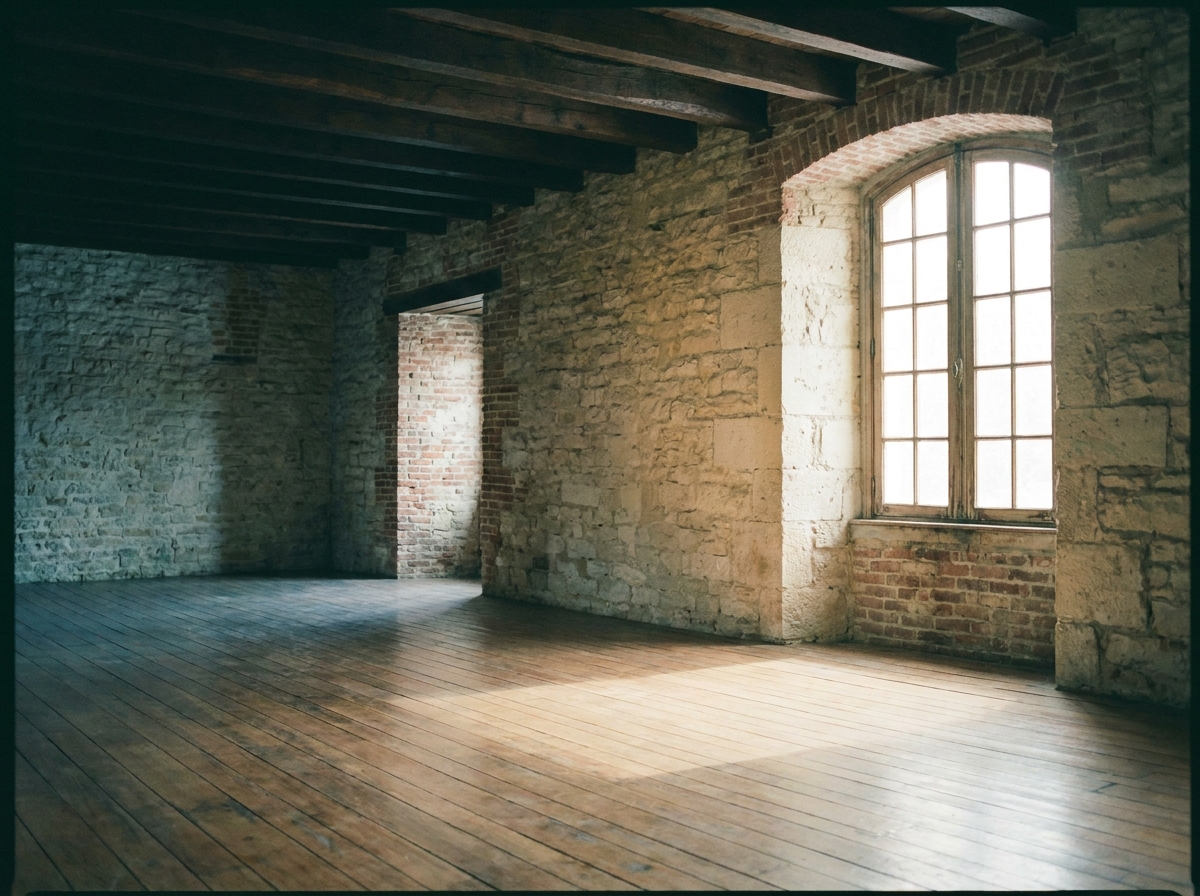
A room that feels like itself.
We open in downtown Clayton in September 2026, in a building that has been waiting for the right tenant. Inside, the work is to make a room that feels like itself, not like a daycare and not like a classroom.
White walls, warm light, a long wooden table that anchors the center. Child-height shelving with real materials on it. A reading corner with a sheepskin and floor cushions. Plants near the window. Coat hooks by the door in a long row, because a child who can hang their own coat starts the day already capable.
Outside the back door, a small patio. Raised beds, a mud kitchen built from reclaimed wood, stump seating, herbs we can actually cook with. The patio is not the playground. It is part of the school.
The downtown space is small on purpose. A school of twenty-eight is supposed to feel like a house, not an institution.
Twenty acres in the St. Lawrence valley, when the time comes.
The downtown space is the first chapter. The longer vision is twenty acres in the St. Lawrence valley. A working kinderboerderij. A real Dutch children's farm, with the animals and the gardens and the workshop space.
Hens, ducks, a goat or two, seedlings, fruit trees, a wood-fired bread oven. A place where children grow up watching things be born and sometimes die, and learn the cycle without a lesson plan.
We are not putting a date on this. Grants take their time, construction takes longer, and the children we open with deserve a school that is fully present from day one, not a building site waiting for a future they will not be part of. The land will come when it comes. The school is already real.
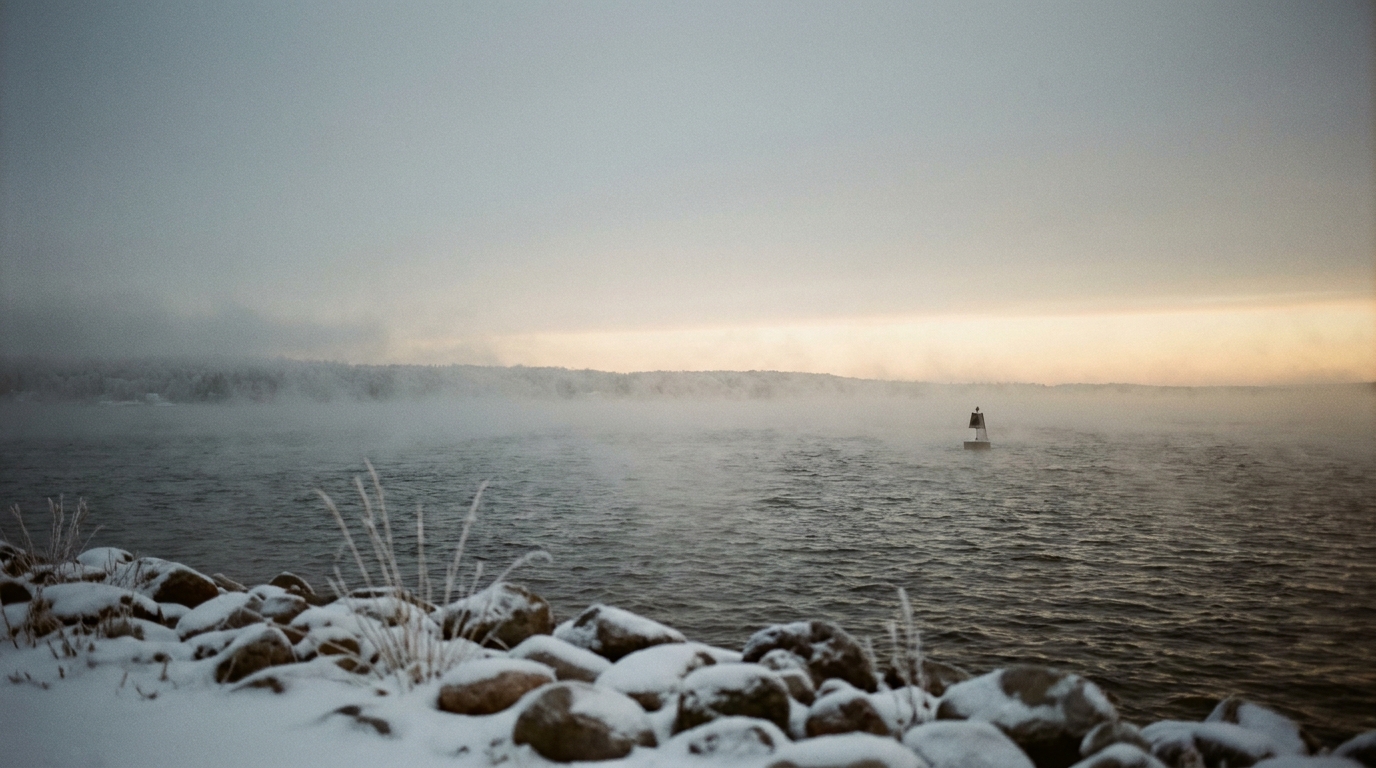
From somewhere specific.
Clayton sits on the St. Lawrence River, in the Thousand Islands, in the part of New York that most of the country has never been to and a small number of people refuse to leave. It is a village of about two thousand.
There is a river that freezes hard in winter and warms enough to swim in by July. There are boats and fishing shacks and old hotels. There is a bakery and a coffee shop and a library and a museum about boats. Winters are real. Summers are the kind that make people remember why they live here.
Growing up in Clayton means being from somewhere specific, and that specificity is exactly what we want the school to be. Lykkehaven means happy harbor in Danish. The harbor part is not an accident.